Home Publications Projects Highlights Resources Team
Original method overview figure for the RIR-Agent paper

Expert Systems with Applications · Vol. 324 · 132495 · 2026

RIR-Agent: An interactive framework for effective and adaptive restoration of remote sensing imagery

An intelligent remote sensing image restoration framework for composite degradations. RIR-Agent uses an MLLM for degradation perception, an LLM for restoration planning, and a modular toolbox with adaptation and rollback mechanisms, while also supporting interactive manual restoration.
ScienceDirect DOI
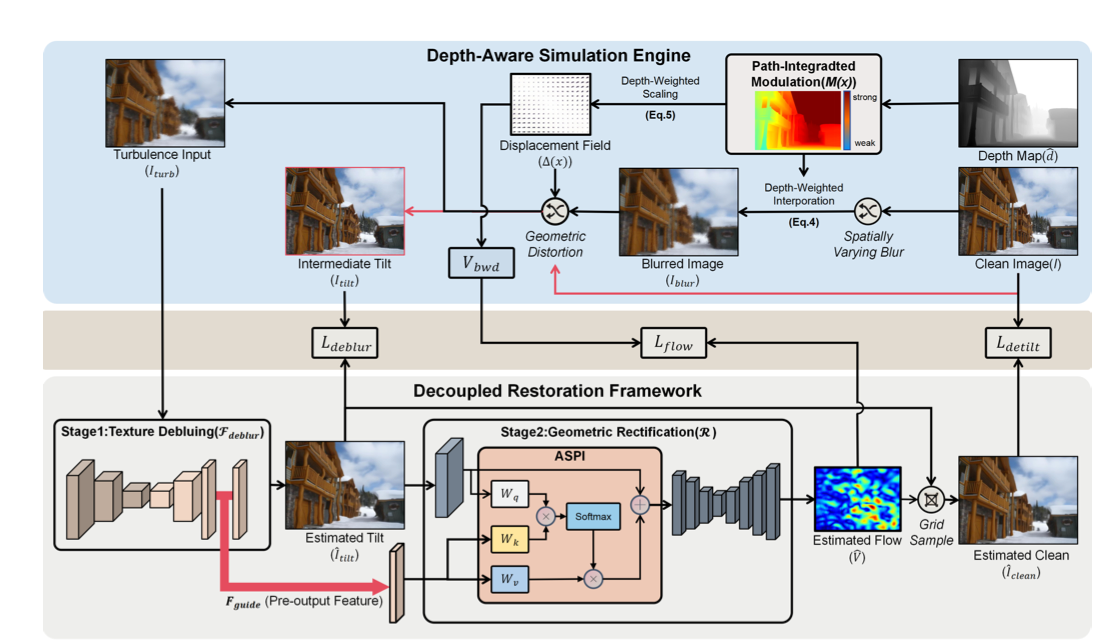
Overview of the D2Turb depth-aware simulation and decoupled restoration framework

arXiv · 2026

D²Turb: Depth-Aware Simulation and Decoupled Learning for Single-Frame Atmospheric Turbulence Mitigation

D²Turb bridges physics-grounded depth-aware turbulence synthesis with explicitly decoupled single-frame restoration. It separates texture deblurring from geometric rectification and uses Adaptive Structural Prior Injection to guide dense flow prediction for spatial unwarping.

arXiv Code
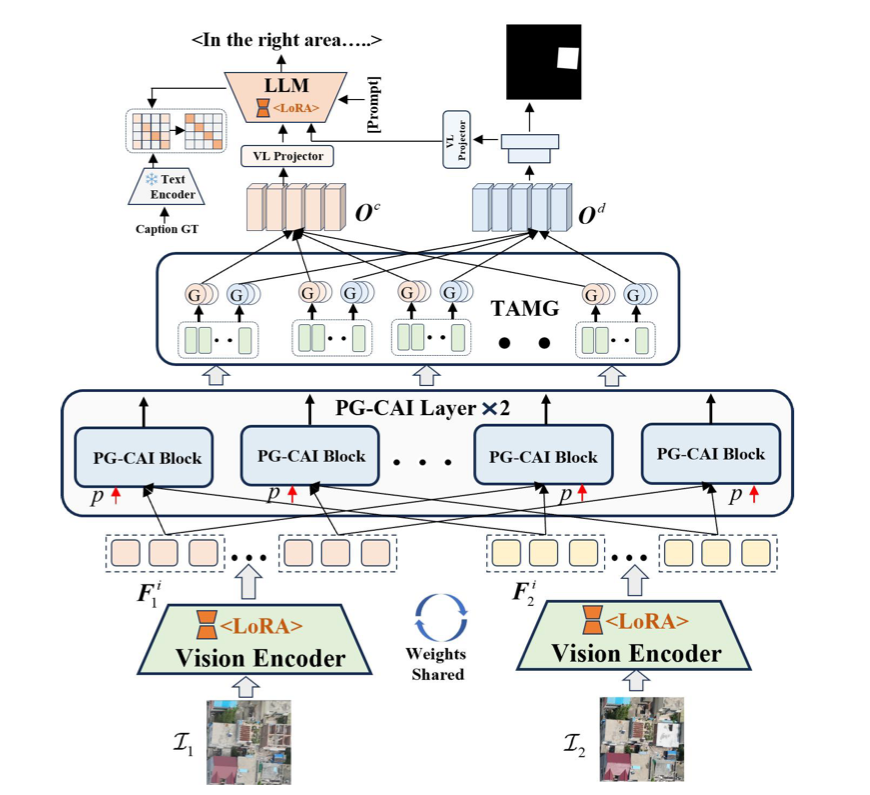
Overall architecture of the PTNet UAV urban construction change captioning model

arXiv · 2026

UAV as Urban Construction Change Monitor: A New Benchmark and Change Captioning Model

PTNet is a prototype-guided task-adaptive framework for joint remote sensing change captioning and detection. It introduces prototype-guided change-aware interaction, task-adaptive multi-head gating, mask-guided caption generation, and the UCCD benchmark with 9,000 UAV image pairs and 45,000 annotated sentences.

arXiv Code
Framework of the HB-PINN hybrid boundary physics-informed neural network method

NeurIPS · 2025

Hybrid Boundary Physics-Informed Neural Networks for Solving Navier-Stokes Equations with Complex Boundary

A Hybrid Boundary PINN method that combines pretrained initialization with boundary-constrained modeling for Navier-Stokes equations under complex boundary conditions, achieving strong results on 2D cylinder wake flow and blocked cavity flow benchmarks.

NeurIPS Paper BibTeX
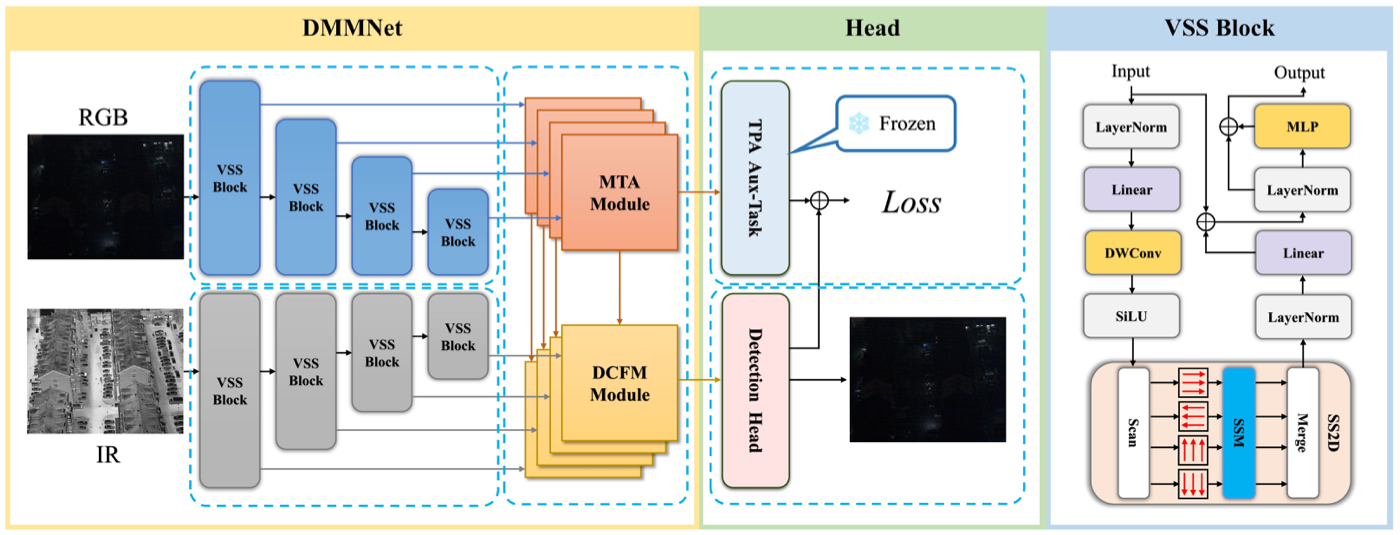
Framework of the DMM disparity-guided multispectral Mamba method

IEEE TGRS · 2025

DMM: Disparity-guided Multispectral Mamba for Oriented Object Detection in Remote Sensing

A multispectral oriented object detection framework that uses disparity-guided cross-modal Mamba fusion, multi-scale target-aware attention, and target-prior auxiliary supervision to improve RGB-IR remote sensing detection on DroneVehicle and VEDAI.

IEEE arXiv Code DOI
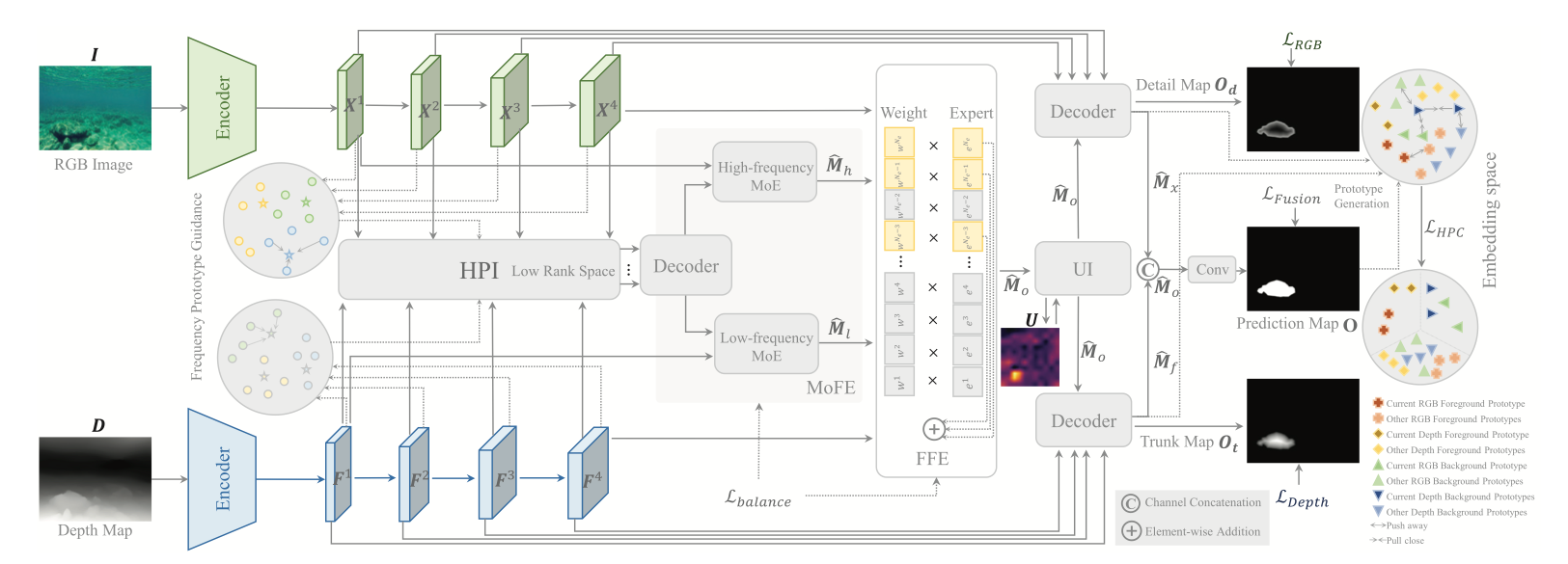
Framework of the HEHP heterogeneous experts and hierarchical perception method

IEEE TIP · Vol. 34 · 2025

Heterogeneous Experts and Hierarchical Perception for Underwater Salient Object Detection

HEHP is an underwater salient object detection framework that models RGB and depth with heterogeneous experts and hierarchical perception. It combines hierarchical prototype guided interaction, mixture of frequency experts, four-way fusion experts, uncertainty injection, and holistic prototype contrastive learning for robust multimodal fusion.

IEEE DOI
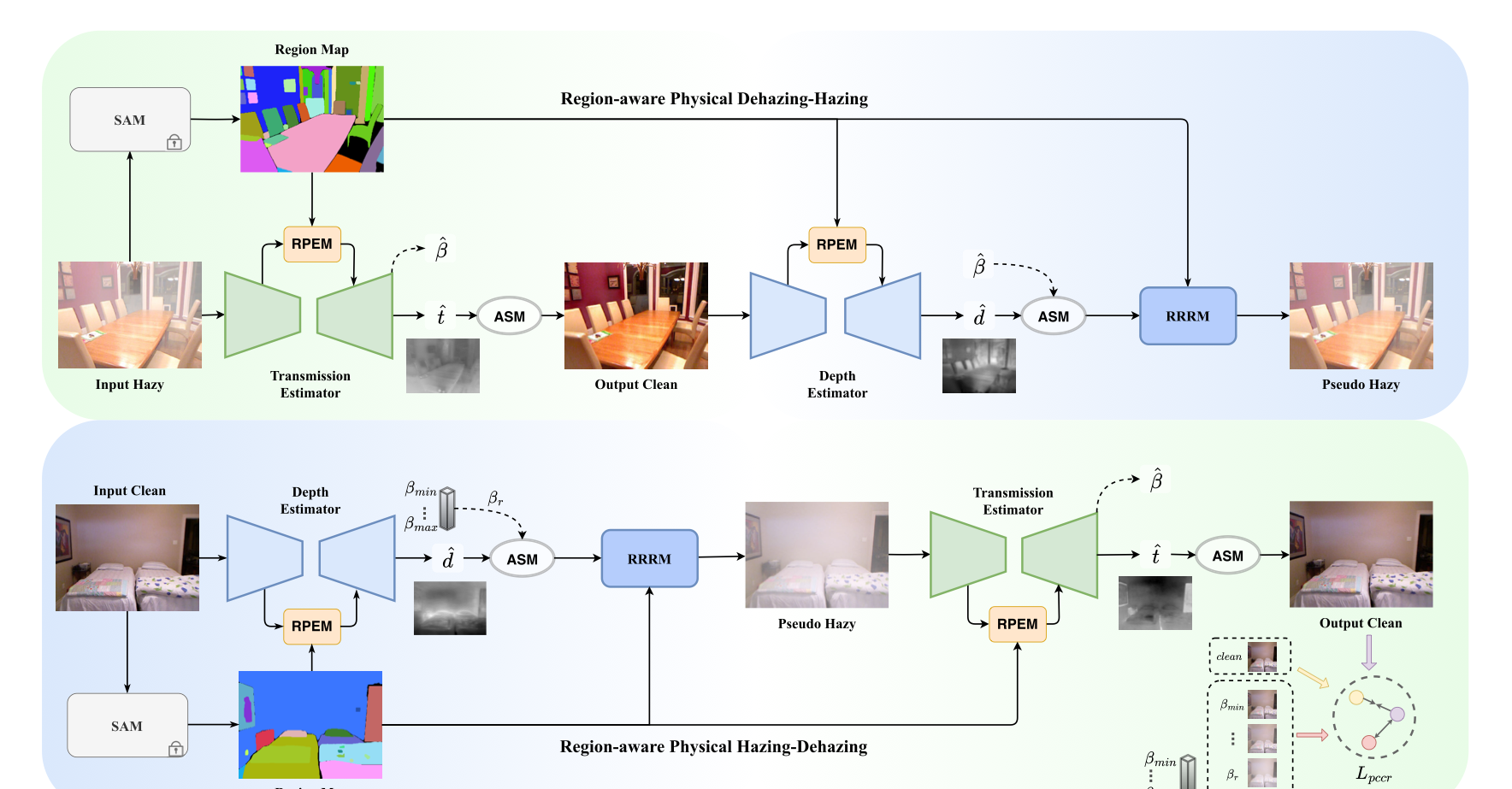
Pipeline of the RPC-Dehaze region-aware physical constraints framework from the paper

IEEE TCSVT · Vol. 35 · 2025

Toward Generalized and Realistic Unpaired Image Dehazing via Region-Aware Physical Constraints

RPC-Dehaze is an unpaired image dehazing framework that uses fine-grained semantic region maps from SAM to guide region-aware physical constraints. It combines cyclic dehazing and hazing networks, Retinex-based illumination modeling, and physical consensual contrastive regularization for more realistic and generalizable dehazing.

IEEE DOI
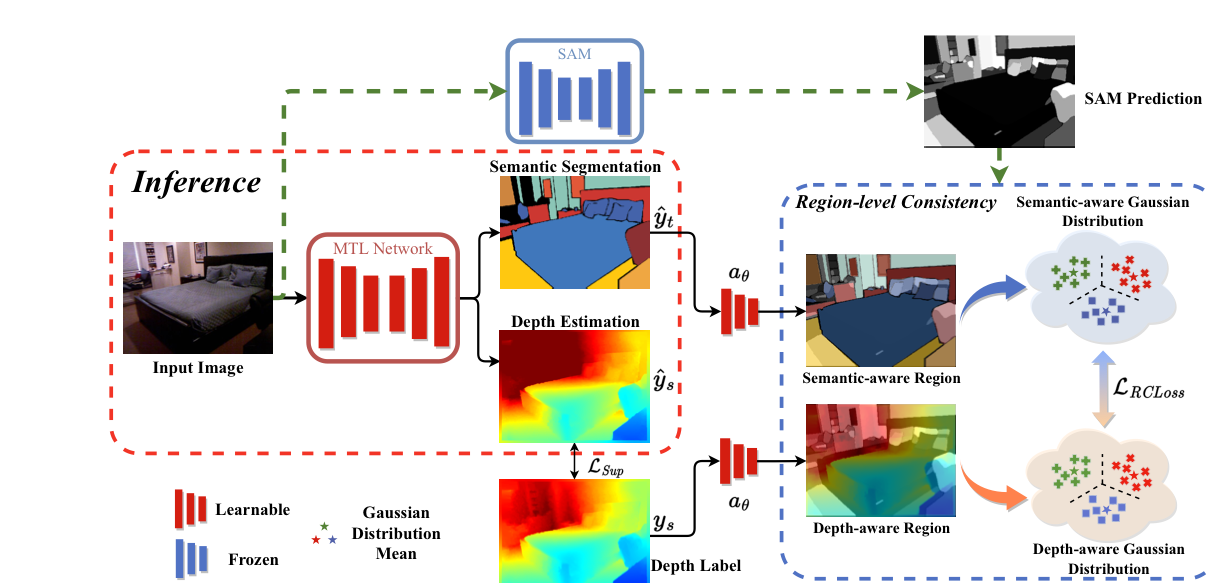
Illustration of the region-aware distribution contrast method for multi-task partially supervised learning

ECCV · 2024

Region-aware Distribution Contrast: A Novel Approach to Multi-Task Partially Supervised Learning

A region-aware distribution contrast method for multi-task partially supervised dense prediction. The approach uses SAM-detected regions, models task-specific regional features as Gaussian distributions, and aligns cross-task distributions to improve semantic segmentation, depth estimation, and surface normal estimation under incomplete labels.

Springer arXiv DOI
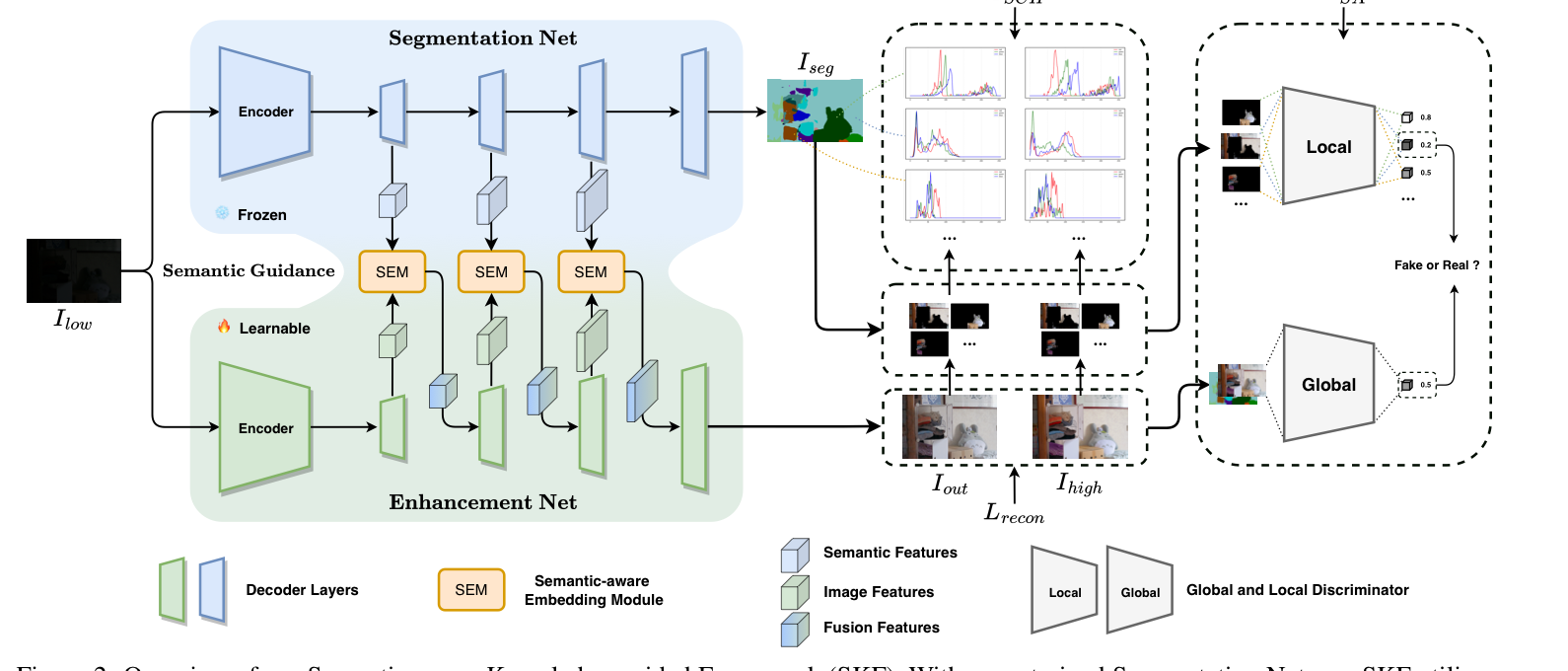
Overview of the SKF semantic-aware knowledge-guided low-light enhancement framework

CVPR · 2023

Learning Semantic-Aware Knowledge Guidance for Low-Light Image Enhancement

SKF is a semantic-aware knowledge-guided framework for low-light image enhancement. It uses a pre-trained segmentation network as a semantic knowledge bank and introduces semantic-aware embedding, semantic-guided color histogram loss, and semantic-guided adversarial loss to preserve region color consistency and improve visual quality.

CVPR Paper

© MIG Lab. All rights reserved.

MIG